
Updated September 2026. Gas-fill physics and leakage ranges from the U.S. Department of Energy Building America Measure Guideline: Energy-Efficient Window Performance and Selection (Carmody & Haglund / NorthernSTAR) and Efficient Windows Collaborative / NFRC consumer guidance. How we research this
Salespeople often treat “argon” and “krypton” as a hierarchy: krypton is denser, so it must be better, so it must be worth the upcharge. That is not how insulated glass units (IGUs) are designed. Gas fill is one part of a system that also includes the cavity width, Low-E coatings, spacer, frame and seals. The decision that matters on your quote is whether the whole-window NFRC U-factor for the krypton option is meaningfully better than the argon option on the same frame — and whether that delta is worth the line-item price.
For most standard double-pane Low-E packages, argon is the value play. Krypton is worth a hard look when the cavity is narrow (common in some triple-pane builds), when you are chasing a Northern-zone U-factor target, or when a single problem window justifies a selective upgrade. There is no universal winner.
What the gas fill actually does
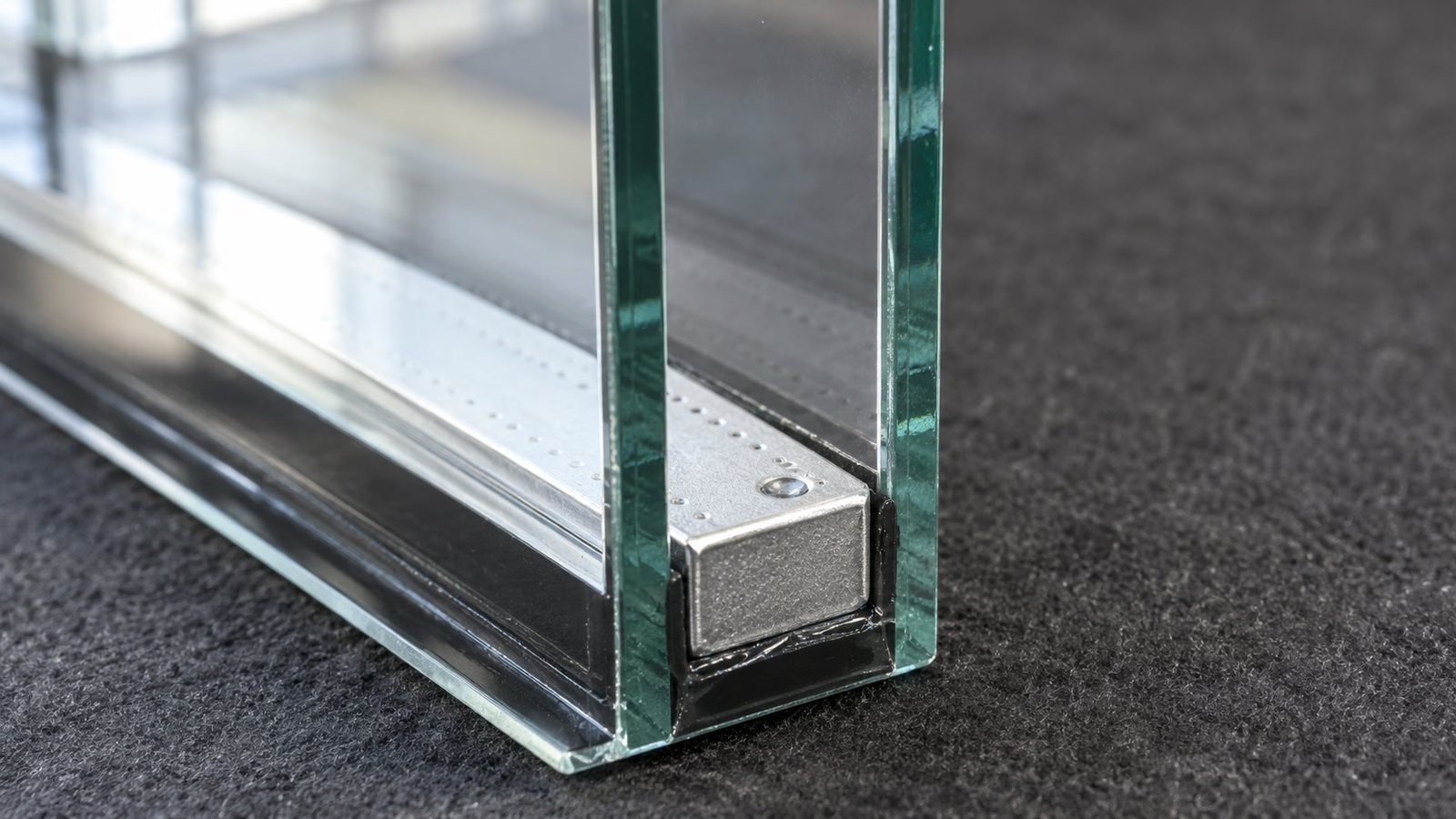
In a sealed IGU, the space between panes is usually filled with dry air or an inert gas. With a Low-E coating present, heat transfer across that gap is dominated by conduction and natural convection. Denser, less conductive gases slow that transfer, which can lower the window’s U-factor (better insulation).
According to the DOE Building America measure guideline:
- Argon and krypton are inert, nontoxic, clear and odorless.
- Krypton has better thermal performance than argon and costs more to produce.
- The optimal spacing for an argon-filled unit is about the same as for air — roughly ½ inch.
- Krypton performs better than argon when the space between glazings must be thinner than normally desired — for example about ¼ inch.
- Argon–krypton mixtures are sometimes used as a cost/performance compromise.
That cavity-width detail is the differentiator most quote sheets skip. Putting expensive krypton into a half-inch double-pane cavity designed for argon rarely buys what the price suggests. Putting argon into a very narrow triple-pane cavity can leave performance on the table that krypton was designed to capture.
Cavity gap: why spacing decides the gas
UpgradeWorth schematic. Not to scale and not a cross-section of a specific product. Gap widths illustrated follow the DOE guideline’s approximate design targets (argon ≈ ½ in; krypton advantage at ≈ ¼ in). Always verify the NFRC label for the unit on your quote.
| Double-pane + argon (typical) | Triple-pane + krypton option |
|---|---|
| Outside | argon (~½ in) | Room Standard Low-E double cavity. Usually the value play. | Outside | Kr (~¼ in) | pane | Kr (~¼ in) | Room Krypton advantage shows in narrow cavities. Justify only if NFRC U wins on the quote. |
| UpgradeWorth schematic (text). Not to scale; not a manufacturer cutaway. Gap targets follow DOE Building America measure guideline approximate design values. | |
When to choose argon vs krypton
Use this matrix as a starting point. It does not replace the NFRC numbers on your quote. “Quality argon double Low-E” means a double-pane package that already meets your ENERGY STAR Version 7.0 zone targets with argon and a competent Low-E coating.
| Situation | Lean argon | Consider krypton (or mix) | What to demand on the quote |
|---|---|---|---|
| Standard double-pane, ~½ in cavity | Default choice for most homes | Only if the U-factor delta is large and priced modestly | Whole-window U for argon vs krypton on the same frame |
| Triple-pane with narrow cavities | Acceptable if U already hits your zone target | Stronger case — krypton is designed for thinner gaps | U, SHGC, VT for each gas option; cavity/spacer notes if available |
| Northern ENERGY STAR zone (U ≤ 0.22) | Often enough with quality double Low-E argon or argon triple | When argon option misses the U target and krypton hits it | Zone certification path + NFRC U for both options |
| South-Central / Southern (cooling, SHGC) | Usually; SHGC and Low-E matter more than gas premium | Rarely for energy alone | SHGC + U; do not pay for krypton to “fix” a high SHGC |
| One cold, oversized, or north-facing problem window | Match the rest of the house on argon | Selective krypton on that opening if the delta is clear | Per-opening NFRC values and the line-item delta |
| Short ownership horizon / tight budget | Prefer argon; put money into install quality | Hard to justify without a large comfort/noise need | Dollar delta, not a vague “premium gas” pitch |
Shareable takeaway: Krypton is not a brand upgrade. It is a cavity-width tool. If the salesman cannot tell you the approximate gap and show NFRC labels for both fills, you are shopping a buzzword.
Does the gas leak out? What that means for performance
No sealed IGU is perfectly hermetic forever. The DOE measure guideline cites studies showing less than about 0.5% leakage per year in a well-designed, well-fabricated unit — roughly a 10% gas loss over 20 years — with only a few percentage points of U-factor change from that loss. Efficient Windows Collaborative / NFRC consumer material makes the same point in plain language: tiny leakage is expected; it is not a health hazard.
What you should worry about is not microscopic annual diffusion. It is a failed perimeter seal. When the seal fails, moist air enters the cavity, fog appears between the panes, and the insulating gas is effectively gone. That is an IGU failure, not a “krypton vs argon” failure. See Fog Between Window Panes for the repair-vs-replace fork.
How this ties to pane count and Low-E
Gas fill is not a substitute for pane count or coating strategy:
- Triple vs double pane decides how many cavities you have and how much weight, VT loss and cost you accept.
- Low-E type and placement drive most of the SHGC story (climate and orientation).
- Gas fill fine-tunes conduction/convection inside those cavities.
- The NFRC label is where those choices show up as whole-window numbers you can compare.
A poorly specified triple with marketing-speak “krypton” can lose to a well-specified double Low-E argon unit on the label that actually matters. Pane count and gas name are construction details. U-factor and SHGC are the decision metrics.
ENERGY STAR Version 7.0 — gas fill is not a criterion
ENERGY STAR does not require argon or krypton by name. Version 7.0 sets U-factor and SHGC by climate zone (and air leakage ≤ 0.3 cfm/ft²). Many certified windows use argon; some high-performance triples use krypton or mixes. Certification is about the rated numbers for your zone, not the gas badge on the brochure.
| ENERGY STAR V7.0 zone | U-factor | SHGC |
|---|---|---|
| Northern | ≤ 0.22 | ≥ 0.17 (or documented equivalent pathway) |
| North-Central | ≤ 0.25 | ≤ 0.40 |
| South-Central | ≤ 0.28 | ≤ 0.23 |
| Southern | ≤ 0.32 | ≤ 0.23 |
Source: ENERGY STAR Program Requirements for Residential Windows, Doors, and Skylights — Eligibility Criteria Version 7.0 (effective October 23, 2023). Find your county zone at energystar.gov.
What others get wrong
- “Krypton is always better.” Better in which cavity? Without gap width and NFRC delta, the claim is incomplete.
- Comparing center-of-glass gas claims to whole-window labels. Demand whole-product NFRC ratings for both options.
- Paying for krypton to fix a bad SHGC. Solar heat gain is mostly a coating and orientation problem.
- Assuming gas fill lasts forever or vanishes overnight. Well-built units lose gas slowly; fog between panes means seal failure.
- Inventing bill payback years from gas density marketing. UpgradeWorth does not publish fake national savings. Compare the line-item delta to the U-factor delta on your quote.
Quote checklist: 7 gas-fill questions
- What gas fill is specified for each glass package (argon, krypton, mix, or air)?
- What are the whole-window NFRC U-factor, SHGC and VT for each option on this exact quote?
- What is the dollar delta for gas only, holding frame and install method fixed?
- Approximate cavity width(s) for the unit — especially if triple-pane?
- Spacer type if stated (warm-edge vs aluminum can affect edge condensation)?
- What does the seal / insulated-glass warranty cover if fog appears between panes?
- Which ENERGY STAR V7.0 zone is this package designed to meet?
If two quotes cannot produce those labels, they are not comparable. Use the window quote checklist and Compare Two Window Quotes before you negotiate. For whole-project cost context, see window replacement cost and why window quotes vary.
Krypton upcharge worksheet: two offers, one window
The matrix above tells you when krypton is worth asking about. This worksheet is for the moment you have an actual number in front of you, usually a line that reads something like “krypton, add $___ per window,” and need to decide whether it buys anything. Fill it in from your own paperwork. Every dollar cell is blank on purpose: krypton upcharges depend on the manufacturer, the glass package, the window size and the dealer, and we have no current, traceable source that would make a “typical” figure honest.
Use one column per offer. Offer A is normally the argon package and Offer B the krypton (or argon–krypton blend) package for the same window. If you are comparing two contractors who both quote krypton, run the worksheet once per contractor instead of mixing their numbers in one table.
| Line | Offer A (argon) | Offer B (krypton or Ar/Kr blend) | How to fill it in |
|---|---|---|---|
| 1. Same unit and configuration | Series, operation, size, frame, pane count, Low-E, spacer: ____ | ____ | Everything except the gas should match. If anything else changes, write it on line 8. |
| 2. Gas fill as written | ____ | ____ | Copy the quote’s exact wording (“argon,” “krypton,” “Ar/Kr blend”) and any stated blend percentage. |
| 3. Certified NFRC whole-window U-factor | ____ | ____ | From the NFRC label for that exact unit and glass package, or its listing in the NFRC Certified Products Directory. Not a center-of-glass number from a brochure. |
| 4. U-factor difference (A − B) | — | ____ | Simple subtraction of line 3. If Offer B has no certified rating, stop here: the offers are not comparable yet. |
| 5. Upcharge per unit | $0 (baseline) | $____ | The line-item price difference per window with frame and installation held the same. If the quote only shows package totals, ask for the gas line separately. |
| 6. Quantity | — | ____ units | Only the openings that would actually get krypton. |
| 7. Total upcharge | — | $____ | Line 5 × line 6. |
| 8. Remaining differences | ____ | ____ | Anything besides the gas that differs: coating, glass thickness, spacer, pane count, sash or frame, warranty terms. If this row is not empty, the line 4 difference belongs to the whole package, not to the gas alone. |
| 9. Documented annual energy estimate | ____ | ____ | Only an estimate prepared for your house with both packages modeled the same way (same weather data, window areas, orientations and utility rates). A “typical house” figure or a sales percentage does not qualify. |
| 10. Simple payback (years) | — | Cannot calculate from available information | Replace this only if line 9 is filled for both offers: line 7 ÷ (annual cost A − annual cost B). Otherwise leave it as written. |
Why line 10 starts out blank. There is a tempting shortcut: multiply the U-factor difference by your window area, your heating degree-days and your fuel price, and call the result annual savings. We don’t do that here, and we’d be wary of anyone who does it without showing their model. An NFRC U-factor is a standardized, certified rating — computer simulation validated by physical testing under NFRC procedures — built so you can compare products like for like. Your actual bills also depend on solar heat gain through each window, which changes with orientation and shading, plus air leakage, how the house is heated and cooled, equipment efficiency and the rates you pay. Whole-house window models, such as Lawrence Berkeley National Laboratory’s RESFEN program, take local weather, the house’s insulation package, window data and electric and gas rates as separate inputs. That is the level of modeling a payback number needs.
The Department of Energy also points homeowners to NFRC’s Window Selection Tool, which compares simulated annual energy use for a typical house in your city across window options. That is useful for orientation, but it is not an estimate for the two specific units on your quote, so it does not belong on line 9.
Once the worksheet is filled in, put the whole quote through the Window Quote Analyzer: the krypton line is one item among many, and a large gas upcharge on a quote that is vague about installation is a bigger problem than the gas.
Worksheet sources (each accessed October 7, 2026):
- National Fenestration Rating Council, Residential Product Certification — how U-factor, SHGC and VT are determined (simulation validated by physical testing) and how certified products are labeled and listed.
- NFRC, Certified Products Directory — public lookup of certified ratings by manufacturer and product type.
- NFRC Consumer Guide to Windows, Window Ratings — whole-product ratings; the right values depend on climate and the orientation of each window.
- U.S. Department of Energy, Energy Saver: Purchasing Energy-Efficient Windows — compare with the NFRC label or Certified Products Directory; orientation affects selection; the Window Selection Tool’s typical-house simulations.
- Lawrence Berkeley National Laboratory, RESFEN — whole-house model inputs (location weather, insulation packages, window library, electric and gas rate libraries). The latest release listed is version 6.0.16 beta from December 2012, so we cite it to show the inputs a real estimate needs, not as a tool recommendation.
How we researched this
This guide synthesizes primary technical sources. We did not laboratory-test windows or gas fills ourselves.
- U.S. DOE Building America / NorthernSTAR: Measure Guideline: Energy-Efficient Window Performance and Selection (Carmody & Haglund) — gas-fill physics, argon ≈ ½ in optimal spacing, krypton advantage in thinner (~¼ in) gaps, mixture use, and published leakage/performance notes. PDF via Efficient Windows Collaborative.
- Efficient Windows Collaborative / NFRC consumer guidance: plain-language explanations of gas fills, comfort, and expected small leakage rates.
- ENERGY STAR Version 7.0: zone U-factor and SHGC criteria (gas fill is not named as a separate requirement).
- NFRC: whole-product rating definitions — compare labels, not brochure gas names.
Community forums (Reddit, replacement-window discussion boards) show homeowners repeatedly asking whether krypton is “worth it.” We treat those threads as demand signals, not as measured savings. See also methodology and the site disclaimer. Related reading: Are new windows worth it? and the Windows hub.
Is argon enough for most replacement projects?
Usually yes for standard double-pane Low-E packages with a typical half-inch cavity, provided the whole-window NFRC numbers meet your climate-zone goals. Put remaining budget into installation quality and the right SHGC for each elevation.
When is krypton clearly worth comparing?
When cavities are narrow (often in triples), when the argon option misses a Northern U-factor target that the krypton option meets, or when one problem opening shows a clear NFRC and comfort delta at a known line-item price.
Do argon or krypton windows fog when the gas escapes?
Visible fog between panes usually means moist air entered through a failed seal — an IGU failure. Slow microscopic leakage in a sound unit does not typically produce fog and only slightly changes U-factor over decades, per the DOE guideline’s cited ranges.
Should every window in the house use the same gas?
Not necessarily. Some homeowners selectively upgrade a north-facing or oversized opening while keeping argon elsewhere. List each glass package with its own NFRC ratings on the quote so you are not averaging unlike products.
Can I estimate my krypton savings from the U-factor difference alone?
No. The NFRC U-factor is a rating for comparing products on equal terms, not a forecast of your bill. Annual energy also depends on solar heat gain by orientation, air leakage, your heating and cooling equipment and your utility rates. Fill in the payback line of the worksheet above only when you have a documented estimate for your own house that models both packages the same way.
What if the krypton option has no NFRC rating of its own?
Ask for the NFRC label, or the Certified Products Directory listing, for that exact glass package. Without a certified whole-window number you would be paying for a gas name rather than a rated result, so treat the two offers as not comparable until the rating shows up.
What if the krypton upgrade also changes the coating or adds a pane?
Then the U-factor difference belongs to the whole package, not to the krypton. Ask the dealer whether they can rate and price a version that changes only the gas. If they can’t, judge the upgrade as a package on its label and its price, and list the other changes on line 8 of the worksheet.
Is an argon–krypton blend compared the same way?
Yes. Give the blend its own column, its own certified rating and its own line-item price. A stated blend percentage is useful context, but the whole-window rating is the number you compare.