
Updated September 2026. Cost figures are planning estimates from named sources. How we estimate costs
Replacing a patio door usually costs about $2,500, and most projects land between $1,550 and $6,250 installed. The spread is that wide because two very different jobs share the name: a two-panel vinyl slider dropped into an existing opening, and a wide multi-panel door cut into a wall that never had one.
The good news, and it is genuinely good news, is that a lot of patio door complaints are hardware problems. Rollers, weatherstripping and latches are cheap. Before you price a replacement, it is worth knowing which category your door falls into.
Patio door replacement cost at a glance
$1,550–$6,250
Installed, replacing an existing patio door in its current opening.
- National average
- About $2,500
- Full published spread
- $600–$10,000
- Glass unit only
- $250–$1,000
- New opening in a solid wall
- Adds $1,000–$3,600
- Removal and disposal
- $150–$400
What the published numbers actually cover
| Figure | Cost | What it describes | Source |
|---|---|---|---|
| Typical replacement range | $1,550–$6,250 | Replacing an existing patio door, national | Angi (2026) |
| National average | About $2,500 | Where a straightforward swap usually lands | Angi and This Old House (2026) |
| Full spread | $600–$10,000 | Everything from a basic slider to large multi-panel systems | This Old House (2026) |
| Sliding doors specifically | $1,200–$4,500, average about $2,600 | Sliding door installation including labor | Angi door installation guide (2026) |
| French patio doors | $2,000–$5,000 | Hinged pairs, where the frame work is more involved | Angi door installation guide (2026) |
National figures. Two sources can both be right and still differ by thousands, because one is pricing a stock two-panel slider and the other an eight-foot custom unit.
Three things move a quote more than anything else: the width and panel count, the frame and glass package, and whether the opening already exists. A like-for-like replacement is a one-day job. Cutting and framing a new opening is small-scale construction, and Angi puts that addition at $1,000 to $3,600, which is what pushes totals past $6,000.
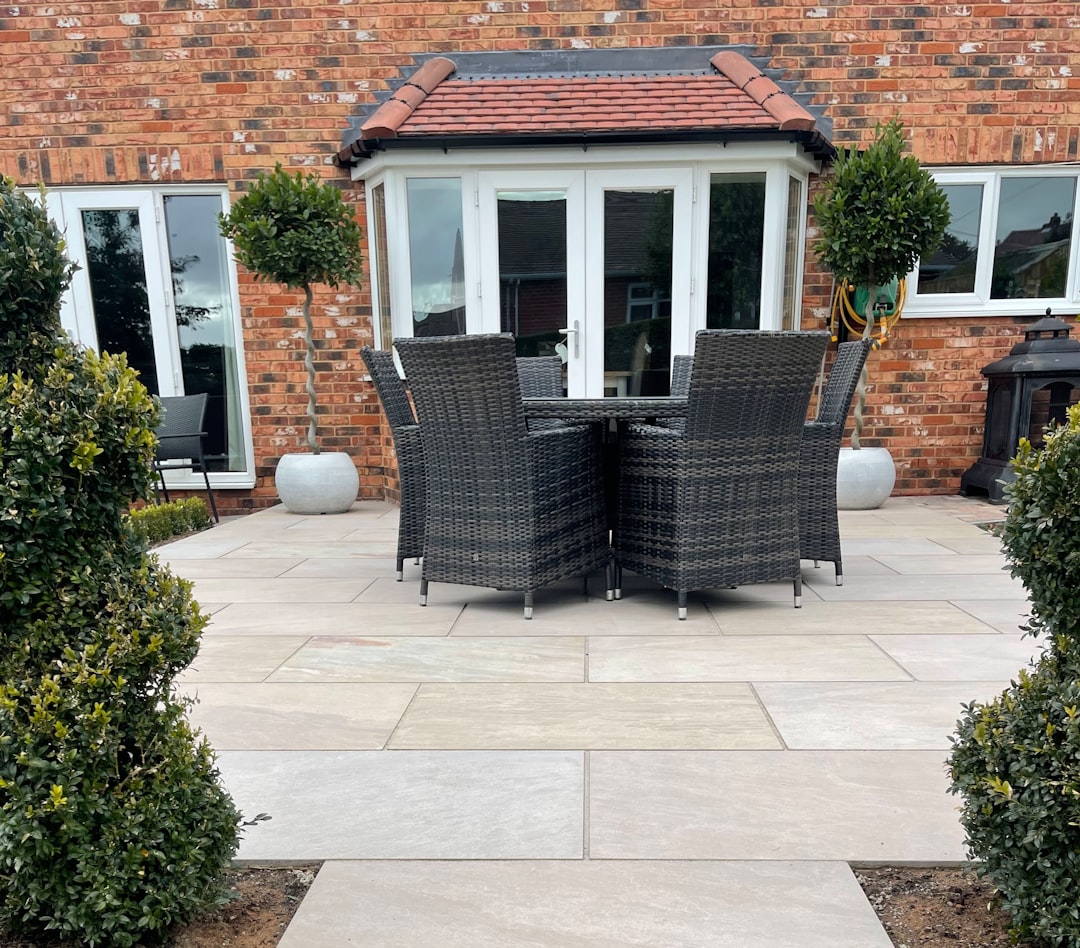
Sliding or French: decide with a tape measure
Floor space usually settles this, and price follows in the same direction.
| Sliding patio door | French patio doors | |
|---|---|---|
| Installed cost | $1,200–$4,500 (avg. about $2,600) | $2,000–$5,000 |
| Floor space needed | None. Panels travel along a track | Swing clearance inside or outside, typically 2 to 3 feet |
| Glass area | Maximum glass for the opening | Slightly less, because of the meeting stiles |
| Opening when fully open | Half the opening | Close to the full opening |
| Common failure points | Rollers, track, latch | Hinges, panel sag, the seal where the doors meet |
| Best for | Tight rooms, maximum daylight, tighter budgets | Open floor plans, moving furniture, traditional houses |
Cost figures: Angi (2026). The remaining rows are practical comparisons, not measured data.
The test takes 30 seconds. Stand where the door will go and mark 30 inches into the room. If that strip has to hold a sofa, a table or a walkway, buy a slider and stop agonizing over it.
Materials
Frame material affects price, upkeep and how the door behaves in your climate.
- Vinyl. The budget default for sliders. Low maintenance, widely available, fewer color options. Big vinyl panels in intense sun are where quality differences show up.
- Fiberglass. Costs more, holds its shape through temperature swings, takes paint. A sensible upgrade for wide openings and harsh climates.
- Aluminum. Slim frames around a lot of glass, which is the architectural point of it. Metal conducts heat readily, so the thermal break and the glass package matter more here than anywhere else.
- Wood and clad-wood. The premium tier, bought for interiors where the door is furniture. Clad exteriors cut the maintenance; bare wood on a weather-facing wall does not.
Whatever the frame, the glass carries most of the surface area on a patio door, so it carries most of the performance. Look for the ENERGY STAR label for your climate zone instead of accepting a generic “energy efficient” line in a pitch.
How the product lines compare
Patio door quotes rarely name the specification, which is how two prices thousands apart end up looking identical on paper. These are the lines homeowners most often see quoted, with what actually separates them.
| Example line | Frame material | Style | Where it sits |
|---|---|---|---|
| Pella 250 Series | Vinyl | Sliding | Entry tier. Regional installers quote Pella’s 250 Series vinyl windows at roughly $500–$900 per window installed, which is a useful read on where the line sits overall |
| Pella Lifestyle Series | Wood interior, clad exterior | Sliding and hinged | Mid-tier flagship, sold against Andersen’s 400 Series |
| Andersen 100 Series | Fibrex composite, not fiberglass | Gliding | Budget to mid. Andersen states Fibrex expands and contracts far less than vinyl |
| Andersen 400 Series | Wood with aluminum cladding | Gliding and hinged | Premium mainstream, the one most often specified on remodels |
| Stock sliders at Lowe’s and Home Depot | Mostly vinyl | Sliding, standard sizes only | Price floor for a standard opening. Compare like for like against a dealer quote |
Line positioning from manufacturer product pages and regional installer pricing published in 2026. Examples, not endorsements; we earn nothing from these links. Confirm current line names and configurations on the manufacturer pages, which change year to year.
Two practical notes. First, “composite” and “fiberglass” are not the same thing, and a salesperson will not always volunteer the difference. Second, impact ratings for hurricane zones are product and configuration specific, not brand-wide, so a line being available impact rated says nothing about the unit in your quote.
Repair or replace
Most patio door complaints are hardware, and hardware is cheap next to a new door.
| What you notice | Try first | Replace the door when |
|---|---|---|
| Hard to slide, or it jumps the track | Clean the track, adjust or replace the rollers | The track itself is bent, corroded or worn flat |
| Fog or moisture between the panes | Replace the insulated glass unit: $250–$1,000 (Angi) | Several panels have failed, or the frame is worn too |
| Drafts along the edges | New weatherstripping and sweep, adjust the latch | The frame is out of square or the sill is rotted |
| Water on the floor after rain | Clear the weep holes, check the exterior seal | Water is getting in behind the frame, or the subfloor is soft |
| The lock will not engage | Replace the latch and keeper, realign the panel | The panel has sagged because the frame has moved |
| Single-pane or 1980s aluminum unit | Nothing cheap left to try | Comfort, noise and condensation all improve with replacement |
Our dividing line: if the glass and frame are sound and the problem rides on a track or a hinge, repair it. If the frame is the problem, replace, because every fix after that is temporary.
Hidden costs and what belongs on the quote
- Removal and disposal: $150 to $400 (Angi). Legal disposal of the door and construction debris can reach $400 by itself, so confirm it is included rather than added at the end.
- Interior and exterior trim. A new unit rarely matches the old casing. Ask who finishes it and with what.
- Sill and subfloor repair. Patio doors sit at the wettest point of the wall. Rot is common and is found after demolition, not before.
- Screens. Sometimes standard, sometimes an add-on. Check the line item.
- Blinds between the glass. A factory option chosen at order time. It cannot be retrofitted later.
- Lead-safe work. In homes built before 1978, federal EPA rules require certified renovators and lead-safe practices when painted surfaces are disturbed.
Worth it if
- The frame is rotted, bent or out of square
- You have a single-pane or early aluminum slider and the room is uncomfortable
- Several glass units have failed at once
- The door is a security weak point: damaged frame, no working lock
- You are changing how the room is used and need the wider opening French doors give
Skip it (for now) if
- Only the rollers, track or latch are worn
- One glass unit is fogged and the frame is sound
- You want French doors but have under about 30 inches of clear floor for the swing
- You are selling in months and the door works: a patio door is not a curb appeal item
How to lower the cost
- Keep the existing opening. New framing is the single biggest avoidable line, at $1,000 to $3,600.
- Stay with standard sizes. Custom widths and heights are made to order and priced that way.
- Match the glass to your climate instead of buying the top package by reflex. On a surface this size, the wrong glass costs you twice.
- Get three quotes on one specification: same panel count, same material, same glass, trim and disposal included.
- Try the cheap fix first. Rollers and weatherstripping are worth an afternoon before you price a replacement.
No federal tax credit in 2026. The Section 25C credit for exterior doors ended for property placed in service after December 31, 2025 (IRS). Some quotes still advertise it. State and utility rebates are what is left.
How we got these numbers
We do not gather contractor bids or run surveys. Replacement ranges, the disposal figure, glass-only pricing and the new-opening adder come from Angi’s 2026 patio door guides. The average and the wider $600–$10,000 spread come from This Old House (2026). Where they disagree we show both and explain what each is pricing. Material notes are qualitative because we have not found current, comparable installed prices by material from a source we trust. Manufacturer and retailer links are examples for comparing specifications; we earn nothing from them. Full methodology.
FAQ
How much does it cost to replace a sliding glass door?
About $2,500 on average, with most replacements between $1,550 and $6,250 installed. Sliding doors specifically run $1,200 to $4,500 including labor.
Is it cheaper to replace just the glass?
Much cheaper, when the frame is sound: $250 to $1,000 for the insulated glass unit against $2,500 or more for the whole door.
Are French doors more expensive than sliding doors?
Generally yes, about $2,000 to $5,000 installed against $1,200 to $4,500 for a slider. They also need floor space for the swing, which a slider does not.
How long does patio door replacement take?
A like-for-like replacement is usually one day. Cutting a new opening adds framing, a header and finishing work, so it takes longer.
Do I need a permit?
Usually not for a same-size replacement. Changing the opening size or altering structural framing normally does. Confirm with your local building department.
Why does my patio door leak water?
Most often blocked weep holes at the sill or a failed exterior seal, both inexpensive to fix. Water appearing behind the frame, or soft flooring at the threshold, points to something bigger.
Planning note: These are U.S. planning estimates, not quotes. Local labor rates, door size and the condition of the opening decide your real price. Get at least three written quotes. See our methodology and disclaimer.