
Updated October 7, 2026 by UpgradeWorth Editorial. Code and manufacturer statements below come from the documents listed under Sources, checked on that date. This page does not say how much an overlay saves, how long it lasts or what it does to your insurance, because no source we trust publishes a number or a rule for that which holds for your roof. How we research this
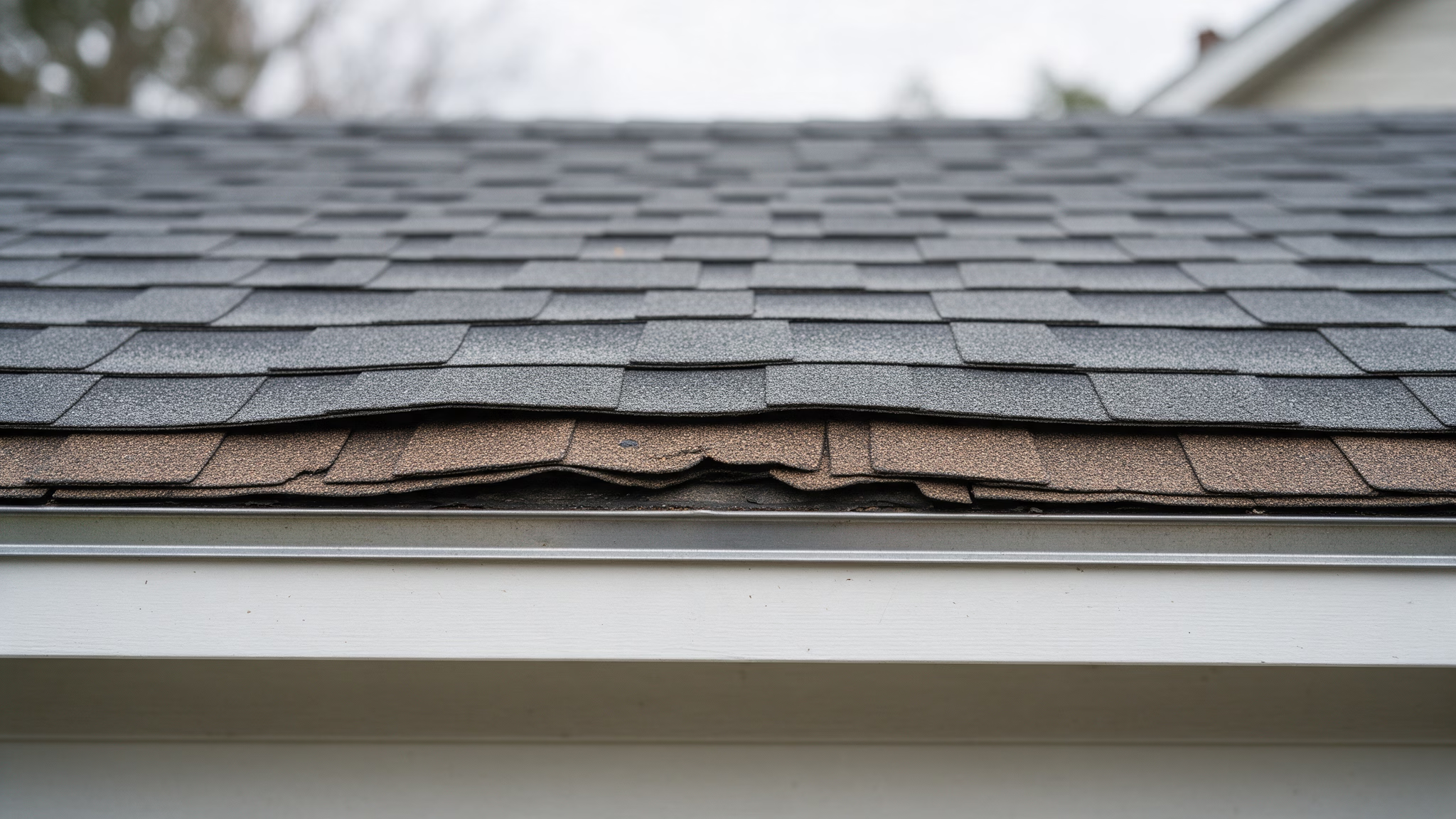
An overlay (also called a layover or a roof recover) means new shingles go on top of the old ones instead of the old roof coming off. Homeowners usually meet that word in one of two ways: a contractor offers it as the cheaper option next to tear-off bids, or a home inspector finds it already on a house. Both are buying decisions, and both turn on the same question: what can anyone actually see, and what is being assumed?
Why this page exists: two situations come up again and again in the homeowner discussions we read while researching roofing quotes. One homeowner has three bids, two tear-offs and one noticeably cheaper overlay, and cannot tell whether the cheap one is a bargain or a different job. Another is under contract on a house and the inspection report says the roof has two layers. We are not repeating anyone’s numbers here; prices posted in a forum describe one roof in one market. What we can do is lay out what each homeowner can verify, what stays unknown, and what to ask. That is the matrix below.
If you are still deciding whether the roof needs replacing at all, that is a different question, covered in roof repair vs replacement. This page starts from the point where a new roof is on the table.
Two situations, one decision
A · You have a cheaper overlay bid
One contractor proposes installing new shingles over the existing roof. The others propose tearing it off to the deck. The overlay total is lower, and you need to know what that gap is buying and what it is leaving out.
B · The house already has a layover
A home inspection, a roofer or your own look at the roof edge shows two layers of shingles. Either you are deciding whether to buy the house, or you already own it and want to know what the next roof job will involve.
In both cases the money question comes last. First come three things you can check: whether a recover is allowed on this roof, what is known about the deck and the existing layers, and what each warranty document actually requires.
What the code and the shingle makers limit, in brief
Where the 2021 International Residential Code has been adopted, a roof replacement removes the existing layers down to the deck, and a recover is the exception. The code does not allow a recover over a roof that is water-soaked or too deteriorated to serve as a base, over slate or certain tile coverings, or where the roof already has two or more layers. That last condition matters most for scenario B: under that edition, a house that already has a layover cannot take a third layer.
Manufacturers set their own conditions, and they differ by brand and by warranty tier. GAF, for example, publishes a technical bulletin on roofing over existing shingles that expects only one existing roof and a smooth, prepared surface, and it also offers warranty tiers that require removal to the deck. Other manufacturers publish their own installation instructions and warranty terms; read the ones for the shingle on your bid rather than assuming GAF’s rules apply. The step-by-step version, covering how a bid should state removal, deck assumptions and existing ice barrier, is in the tear-off and deck-condition decision flow on our shingle quote decoder. We will not repeat it here.
Local adoption is the part nobody can answer from a website. States and cities adopt different code editions, on different schedules, with their own amendments. Your building department decides what is allowed on your roof, and a permit application is where an overlay gets checked against that.
The overlay decision matrix
This is the core of the page. Each row is a situation a homeowner is actually in. Each column is something you need to pin down before you sign or buy. A cell you cannot fill is a question to send back to the contractor, the seller or the inspector. Swipe sideways on a phone to see every column.
| Situation | Evidence you can get now | What stays uncertain | Inspection to ask for | Scope on the table today | What a future tear-off would face | Warranty and insurance questions |
|---|---|---|---|---|---|---|
| A. Cheaper overlay bid next to tear-off bids | Each bid’s written removal scope; the existing layer count each bidder states and how they confirmed it; attic photos; the shingle line and warranty tier named on each bid | Condition of the deck under the existing roof, since the overlay crew will not see it; whether soft spots are deck or shingle; whether the overlay bidder checked local rules | A roof walk and attic inspection by each bidder, with photos of the roof edge showing the layer count and any soft, sagging or uneven areas | Overlay: new covering over one existing layer. Tear-off bids: removal to the deck plus whatever deck, flashing and underlayment work they state. Two different jobs | The next replacement would remove two layers instead of one, and the deck would be seen for the first time then. Ask the overlay bidder how they would price that removal later, not just now | Does the shingle maker allow this product over an existing roof, and does the warranty tier on the bid allow it? Ask your insurer whether a second layer changes your policy terms or underwriting, and get the answer in writing |
| B1. Layover found at a pre-purchase inspection | The inspection report and its photos; what is visible at the eaves and rakes; the seller’s disclosure; the building department’s permit history for the address | When each layer went on; whether the overlay was permitted; deck condition under both layers; remaining life of the top layer | A roofer’s evaluation inside your inspection window, with attic photos and a written note on any soft or wavy areas | None yet. You are pricing the house, not a roof job | Where the 2021 IRC applies, no third layer is allowed, so the next roof job removes both layers. Ask the roofer to describe that job, and ask for a written estimate if you plan to negotiate on it | Ask your insurance agent whether two layers affect eligibility, coverage terms or premium for this house, before you close. Ask the seller for any transferable shingle or workmanship warranty and the document that goes with it |
| B2. Layover on a house you already own | Your own records or the previous owner’s; permit history; the layer count visible at the roof edge; any leak history | Deck condition; the top layer’s age and installation quality; whether a warranty applies to it at all | A roofer’s inspection when the roof shows wear or you start planning, not on a fixed schedule from this page | Nothing until the roof needs work. Two layers by themselves do not mean the roof has to come off now | The next replacement includes removing both layers to the deck, and decking work can only be counted once it is exposed. Plan for a tear-off scope, and ask bidders to confirm both layers in writing | Find any existing warranty document and read its transfer and coverage terms. Ask your insurer how the roof is recorded on your policy and whether the layer count matters to them |
Reading the matrix
Two columns decide most cases. If the evidence column is thin, nobody has looked closely enough to price the job, and a lower overlay total is a price for not looking. If the future-tear-off column applies, the cost of removing the old layer has not gone away; it has been moved to the next roof. Neither column puts a dollar figure on it, and we do not either. Your bids do that.
Scenario A: comparing a cheaper overlay bid against tear-off bids
The overlay total and the tear-off totals answer different questions. A tear-off bid prices removal, disposal, a look at the deck and whatever the bid says it will replace. An overlay bid prices a covering on top of what is already there. Setting one total against the other and calling the difference “savings” leaves out what the overlay is not doing.
That does not make an overlay wrong. Where the code allows it and the manufacturer’s instructions accept the existing roof as a base, it is a legitimate scope. It does put the burden on the overlay bidder to show that this roof qualifies. Ask them, in writing:
- How many layers are on the roof now, and how they confirmed it.
- That the local building department permits a recover on this roof, and who pulls the permit.
- Which shingle, which manufacturer instructions and which warranty tier the bid is built on, with the document named.
- How they assessed the deck without removing the roof, and what they will do if they find soft or damaged areas during the job.
- What happens at the edges, the walls and around penetrations, where a second layer meets flashing that was set for one.
For the deck itself, including how a tear-off bid should price damaged sheets, see roof decking on your quote. That page owns the per-sheet line; this one only asks whether anyone will see the deck at all.
Put all the bids in the same tool
Our Compare Roof Quotes tool already has the fields for this. On each bid, set Removal scope to what the paper says: full tear-off to the deck, overlay on the existing roof, or not stated. Set Layers included in the tear-off to what each bidder confirmed. Fill in the decking policy and the manufacturer warranty tier. When the removal scope differs between bids, the tool marks that line Not comparable and tells you to settle it before reading the totals side by side. That is the right answer; the fix is the next section.
If you have no bids yet and want to see how removal scope and existing layers move a price before anyone quotes, the roof replacement cost calculator takes both as inputs. It explains what moves a price; it does not price your roof.
Ask the overlay contractor for a tear-off alternative
The cleanest comparison is the same contractor pricing both scopes on the same roof, with the same shingle, measurements and crew. Then the difference between their two numbers is a difference in scope, not in who is bidding. A contractor who offers an overlay should be able to price a tear-off of the same roof; ask for it as a second option on the same bid, not as a new estimate from scratch.
- The same roof measurement, in squares, on both options.
- The same shingle manufacturer, product line and color.
- Removal of all existing layers to the deck, with the number of layers stated.
- Disposal and dumpster included, and whether extra layers or heavy debris cost more.
- The decking structure: an included quantity and a unit price for each additional sheet, stated before work starts.
- Underlayment and ice barrier named, with where they go.
- Flashing and drip edge: new or reused on each option, piece by piece.
- Ventilation: what changes, if anything, on each option.
- The manufacturer warranty tier each option qualifies for, with the document named, and the workmanship warranty on each.
- Permit responsibility on each option.
- Which lines differ between the two options, listed by the contractor rather than left for you to spot.
Enter the overlay option, the same contractor’s tear-off option and your other tear-off bids as separate bids in the comparison tool. Now the overlay sits next to a like-for-like tear-off from the same company, and the other bids can be read against that.
Scenario B: the house already has a layover
Found at a home inspection
An inspector who reports two layers has told you something real about the house, but not everything. Nobody has removed any shingles, so the deck under both layers is still unseen. Use the time you have under the inspection contingency to fill the evidence column of the matrix: the permit history from the building department, the seller’s disclosure and any warranty paperwork, and a roofer’s evaluation of the top layer and the attic.
Then ask the roofer to describe the next job in writing. Where the 2021 IRC applies, that job removes both layers. A written description, or an estimate if they will give one, is something you and the seller can both read. What you do with it in a negotiation is your call and your agent’s; we do not know what any layover is worth off a price, and nobody can tell you that from a general rule.
Insurance is a question, not a conclusion. We have not found a published rule on second layers that applies across insurers, so we do not state one. Ask your agent directly whether two layers affect coverage, terms or premium for this address, and get the answer before closing.
Already your house
Two layers on a roof that is not leaking and shows no soft or sagging areas is not a reason to replace it today. It is a planning fact. When you do get bids, every bidder should state that both layers come off, and the decking terms matter more than usual because the deck has been covered for two roofs. In the comparison tool, that is Removal scope: full tear-off and Layers included: two layers, confirmed on every bid. A bid that says “as needed” with no layer count is the one to send back.
Warranty documents for the top layer, if any exist, say whether coverage transfers and what it covers. If you cannot find one, assume nothing about coverage and ask the manufacturer or the contractor who installed it.
Run both offers through the tools
Once the removal scope is on paper for every bid, the tools do the bookkeeping.
1 · Compare Roof Quotes
Two or three bids, including an overlay option and a tear-off option from the same contractor. Flags removal scope that does not match as not comparable and lists every other difference.
2 · Roof Estimate Scope Checker
One estimate. Marks the removal scope, the layer count and every other line as stated, vague or missing, and writes out the questions.
3 · Roof Quote Analyzer
The bid you are leaning toward. Sets what you asked for against what the paper actually prices.
For what the warranty lines on each bid mean, see roofing warranties explained. If the bid names a GAF Timberline shingle, the Timberline HDZ quote decoder covers that product’s quote lines. The rest of the contract is in the roof replacement quote checklist, and what drives the overall price is in roof replacement cost. More guides are on the Roofing hub.
Common questions
Is an overlay ever the right choice?
It can be a legitimate scope where the local code allows a recover, the existing roof is a single sound layer and the shingle maker’s instructions accept it as a base. Whether it is the right choice for you depends on what the matrix turns up, especially the deck evidence and the warranty tier you want. Get the same contractor’s tear-off price before you decide.
Does an overlay void the shingle warranty?
It depends on the manufacturer and the warranty tier, so read the document for the shingle on your bid. Some tiers require removal to the deck, and the conditions are set brand by brand; do not assume one manufacturer’s rule applies to another. The shingle quote decoder walks through how to check this on a bid.
Will a layover raise my insurance or hurt resale?
We have not found a published rule that applies across insurers or markets, so we do not state one. Ask your insurance agent about your policy and address, and ask your real estate agent how buyers and inspectors in your area treat it. Disclose it if you sell.
How do I know how many layers my roof has?
The roof edge is the usual place to look, at the eaves or rakes, where layers can show as a stack above the drip edge. A roofer or inspector can confirm it and should photograph it. Ask each bidder to write the count on the bid and say how they checked.
Can I put a third layer on?
Not where the 2021 IRC applies: it does not allow a recover where the roof already has two or more layers. Your building department has the final word on what your jurisdiction has adopted.
Sources
- City of Arlington, Texas — Technical Bulletin: Re-Roof Permits, Inspections & Common Q&A, September 13, 2023 (2021 I-Codes adopted; quotes 2021 IRC R908.3 removal to the sheathing and R908.3.1.1 conditions where a recover is not allowed: water-soaked or deteriorated roof; slate, clay, cement or asbestos-cement tile; two or more applications). Accessed October 7, 2026.
- City of Gillette, Wyoming — reroofing handout quoting 2018 IRC R908.3, R908.3.1 and R908.3.1.1 (same three conditions as the 2021 text above). Accessed October 7, 2026.
- GAF — Technical Advisory Bulletin TAB-R-145, Roofing Over Existing Shingles, February 1, 2021 (one existing roof; smooth, prepared surface; tear-off where old shingles are badly warped or deck deterioration is suspected; local codes govern). Accessed October 7, 2026.
- GAF — Technical bulletin R-169, Complete Roof Tear Offs for Steep-Slope Roofs, February 1, 2021 (complete tear-off required for certain enhanced warranty coverage). Accessed October 7, 2026.
- GAF — Golden Pledge Limited Warranty brochure, RESWT161B-0526 (roof system must not be installed over an existing roof; all existing materials removed to the deck). Accessed October 7, 2026.
- Asphalt Roofing Manufacturers Association — Asphalt Shingle Reroofing: Replacement vs. Recover, revised May 2017 (conditions that call for removal: deck rot or gaps, sagging structure, distorted existing shingles; follow local codes). Accessed October 7, 2026.
Code sections are cited from the editions named in each source; we could not open ICC’s own code text for this update. States and cities adopt different IRC editions and amend them, so confirm the current local requirement with your building department. Manufacturer conditions are GAF’s own and apply to GAF products; check the documents for the shingle on your bid.