
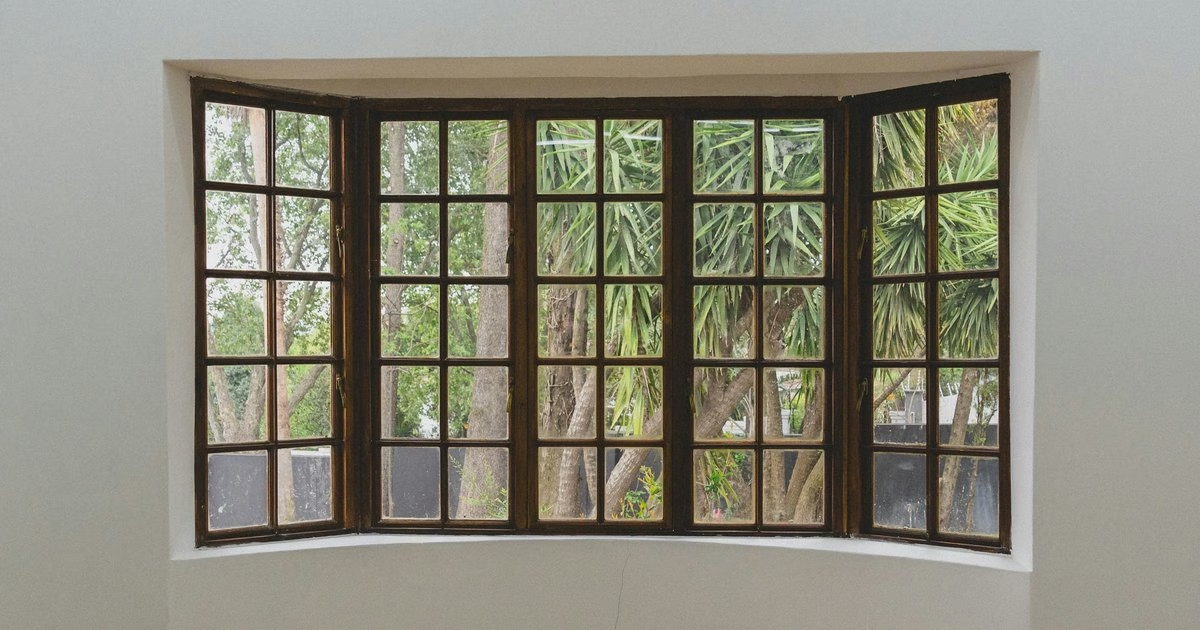
ProVia’s Aeris line is the one window in their catalog with a real wood interior. From outside your house it looks like a vinyl window, because it is — the frame and sash exterior are welded vinyl. Open the sash and the inside face is a piece of actual Oak, Cherry, or Maple, factory-stained or painted to the color you specify. ProVia uses a patented process to attach the wood to the vinyl so the two materials can expand and contract at different rates without the joint failing.
That split personality is the whole point of Aeris, and it’s also what makes the decision tricky. You get the look of a wood window on the room side without having to seal, re-paint, or re-stain the exterior every few years. You also inherit the limits of a finished wood surface indoors: humidity matters, condensation matters, and the interior finish has a different warranty duration than the vinyl shell. This guide walks through what Aeris actually is, what the current ProVia warranty does and doesn’t cover, where it compares to the all-vinyl Endure line, and the exact items to pin down on your quote.
When Aeris makes sense (and when it doesn’t)
Aeris is worth considering when you want the warmth of a stained or painted real-wood interior but you don’t want wood on the outside of the house. Common reasons homeowners end up here: an older home where painted or stained wood sashes are part of the interior style, a room where you’ll never put window treatments and the sash itself becomes the finish, or a replacement project where the previous windows were wood and you want to keep that look on the room side without the maintenance cycle that led to replacement in the first place.
Aeris is less of a fit if you’re happy with a laminated woodgrain or painted interior and want the lowest ongoing care, or if you want a window line that includes garden, hopper, or single-hung styles — those aren’t offered in Aeris and are listed under ProVia’s all-vinyl Endure and Aspect lines. For homeowners in that camp, the ProVia Endure review covers the all-vinyl alternative in depth.
Construction and options
Two things get mixed up on manufacturer pages: features that apply line-wide (every Aeris window has them) and options that depend on how you spec the unit (species, stain, glass package, hardware). The table separates them so you know what’s baked in and what you’re choosing from.
| Item | What Aeris offers | Line-wide or configuration-dependent? |
|---|---|---|
| Frame material | Welded vinyl, 3 1/4″ frame depth (patio doors 4 9/16″) | Line-wide |
| Interior | Real wood applied to sash and frame interior | Line-wide |
| Wood species | Oak, Cherry, or Maple | Configuration |
| Interior finish | 25 stain or 19 paint color options (per ProVia’s wood-vinyl comparison table) | Configuration |
| Exterior colors | White, beige, sandstone, classic bronze standard; custom paint matched to Sherwin-Williams colors | Configuration |
| Insulation | Graphite polystyrene (Neopor®) foam in certain vinyl extrusion cavities | Line-wide |
| Weatherstripping | Barrier-fin + bulb seal (casement and awning use bulb seal) | Line-wide |
| Standard glass package | ComforTech™ DLA-UV: 1″ IGU with clear glass, high-performance Low-E with UV protection, argon fill, Super Spacer | Line-wide (standard) |
| Glass options | 8 glass options across 13 glass packages (incl. DLA, DLA-UV-HC hardcoat, TLA-UV triple-pane) | Configuration |
| Styles | Double hung, 2-lite and 3-lite slider, casement, awning, picture, bay & bow, architectural shapes; Aeris patio doors (2, 3, 4-lite) | Line-wide (styles menu) |
| Styles NOT offered in Aeris | Garden, hopper, single hung | — |
| Hardware finishes | Antique Brass, White, Satin Nickel, Beige, Bright Brass, Sandstone, Flat Bronze, Black | Configuration |
| Screens | BetterVue standard; heavy-duty, SeeVue stainless, aluminum mesh, FlexScreen (standard on painted exteriors, optional otherwise) | Configuration |
| Trim | MasterFit™ factory-finished trim system (2.5″ and 3.5″ colonial, modern, flat profiles) | Optional add-on |
A few things worth noting that often get repeated incorrectly. ProVia’s own Aeris spec column doesn’t list INNERGY® thermal reinforcements or SunShield® vinyl — those appear in the Endure and Aspect spec columns on the same manufacturer tables. If a dealer tells you Aeris uses them, ask them to point you to the current ProVia spec sheet. On energy certification, ProVia says Aeris windows have been independently tested and are ENERGY STAR® certified, but certification depends on the specific configuration, glass package, and climate zone — ask for the NFRC label or the ENERGY STAR listing for the exact unit you’re being quoted in your zone before treating “ENERGY STAR” as automatic.
Aeris vs Endure in plain terms
Aeris and Endure are both ProVia replacement window lines, and because they share so much construction language on the brand’s own pages they get confused. The simplest way to split them is by what’s on the room side.
| Homeowner priority | Aeris | Endure |
|---|---|---|
| Interior look | Real wood (Oak, Cherry, Maple), stained or painted | Vinyl interior with laminated woodgrain or painted color options |
| Interior maintenance | Finished wood surface: humidity-sensitive, can be touched up with a repair crayon or re-finished later | Vinyl/laminate: wipe-down only, no refinishing possible |
| Styles available | DH, slider, casement, awning, picture, bay & bow, shapes, patio doors | Full ProVia styles menu including garden, hopper and single hung |
| Positioning in the ProVia catalog | Wood-clad line — the only Aeris reason to buy is the real wood interior | Premium all-vinyl line — top of ProVia’s vinyl stack, with the broadest glass and color menu |
| Warranty | Same joint warranty card as Endure and Aspect (see below) | Same joint warranty card as Aeris and Aspect |
ProVia sells only through dealers and doesn’t publish prices, so this guide stays out of national-price territory. Aeris typically comes in above Endure because of the wood species, finishing step, and extra assembly it requires, but how much depends entirely on the dealer, your options, and your installation scope — ask both lines on the same opening list and compare like for like.
What ProVia’s current warranty actually covers
The governing document is ProVia’s current “Vinyl Window and Patio Door Warranty — Aeris, Endure & Aspect” card (version 1.0, dated 03/15/2024). It’s the card linked from the current ProVia warranty page as the Aeris/Endure/Aspect card. Older copies float around the internet, including an Aeris-only card from 2021 whose basic-unit clause covers only rigid vinyl components — if your dealer hands you something that doesn’t mention wood components in that basic-unit clause, you’re looking at a superseded document.
The one-word summary is “lifetime limited.” What the current card actually says is more useful than that phrase:
| Component | Duration | Who it covers | Key conditions and what may fall on you |
|---|---|---|---|
| Basic unit (rigid vinyl and factory-applied wood components, not including factory-installed jamb extensions) | Lifetime, transferable once | Original purchaser while they own and live in the single-family home; transferable to one subsequent purchaser | Covers chipping, cracking, peeling, pitting, blistering, warping, delamination. Transfer must be completed online at provia.com/warranty within 30 days of the home sale. |
| Factory-applied paint on vinyl | 15 years from installation | Original purchaser | Non-uniform fading from unequal sun exposure is not covered. |
| Factory-applied paint or stain finish on interior wood | 10 years from installation | Original purchaser | Flaking, checking, blistering, peeling, defects. Damage from condensation and normal wear is specifically excluded. |
| Hardware (locks, balances, operators) | Lifetime | Original purchaser only, while living in the home | Not transferable with the basic unit transfer. |
| Patio door handles — Bright Brass, Satin Nickel, Aged Bronze | Lifetime vs tarnish | Original purchaser | Painted / Flat Bronze / Modern Bronze / Antique Brass handles are 1 year. |
| Insulated glass seal with Super Spacer | Lifetime | Original purchaser while living in the home | Covers seal failure causing film between interior glass surfaces. Minor spots or scratches within Federal Spec 1036-90 are not defects. |
| Glass breakage, including accidents not covered by insurance or within deductible | Lifetime | Original purchaser | Not for IGUs with internal blinds. The defect clause refers to a ‘properly registered’ unit, so register (keep your receipts either way). |
| Internal blinds | 10 years | Original purchaser | — |
| Screens (BetterVue, SeeVue, FlexScreen) | Lifetime | Original purchaser | Manufacturing defects only. Torn mesh is excluded. |
| Bay and bow frames and roof kits | 10 years | Original purchaser | Garden windows are not available in the Aeris series. |
| Non-residential or multi-family installations | Basic unit 5 yr (non-transferable); hardware 1 yr; IG 10 yr (no breakage); blinds and screens 5 yr; finishes 1 yr | Original purchaser | Shortened across the board. |
| Coastal exposure | Non-stainless hardware in casement and patio door units: 5-year mechanical. Brass/nickel/bronze patio door handles: 10-year finish. | Original purchaser | Coastal map on provia.com/coastalwarranty defines the zones. |
What the lifetime warranty doesn’t cover
- Improper installation (this is why the installer’s own labor warranty matters — see the quote checklist below).
- Lack of maintenance, abuse, or negligence.
- Caulking around the window — it’s not part of the window and is the homeowner’s to maintain.
- Condensation and any finish damage caused by condensation.
- Natural weathering and fading, non-factory finishes, customer-applied tints, films, or paint.
- Damage from fire, lightning, windstorm, earthquake, wind-borne objects, building movement, or acts of God.
- Installations outside the continental US.
- Consequential damages — ProVia’s liability is capped at the price of the unit or part.
And a point homeowners almost always miss until they file a claim: on an approved warranty replacement, ProVia ships the part to the nearest authorized dealer, and the purchaser pays all labor to install the replacement and transport from the dealer to the home. ProVia’s warranty is a product warranty. Any labor warranty on your installation is a separate promise from your installer, not from the manufacturer, and dealers cannot extend ProVia’s warranty on ProVia’s behalf. The window warranty guide covers how to compare manufacturer and installer coverage side by side.
The 30-day transfer step
If you sell the home, the basic-unit lifetime coverage transfers to one subsequent purchaser — but only if the transfer is completed online at provia.com/warranty within 30 days of the ownership change. Keep that in your closing packet. The hardware, insulated-glass seal, and glass-breakage coverages do not transfer with the basic unit; they’re tied to the original purchaser while that purchaser owns and lives in the home. For how ProVia’s other window and door cards handle transfers, see our guide to every current ProVia warranty card.
Living with a real wood interior
“Low maintenance” is a fair description of the vinyl exterior. The interior wood is a different story — it’s a finished wood surface in your house, and it behaves like one.
Day to day it’s undemanding: mild soap and water for the stained or painted interior, a light wax every so often, and a wood-finish repair crayon or the touch-up paint the dealer supplies for scratches and chips. Avoid harsh solvents. Keep the sill tracks and weep holes clear, and inspect the exterior caulking at least once a year — caulking is the homeowner’s responsibility and is excluded from the warranty.
Humidity is the one thing worth being deliberate about. The warranty excludes condensation and any finish damage caused by it. If you run a humidifier through the winter, aim for the lower end of comfortable — 30 to 40% relative humidity is a common range — and watch for condensation on the glass as a sign the air in the room is wetter than the windows can handle.
One Aeris-specific detail worth knowing before you call the installer back out: ProVia’s own care guidance says the wood components are designed to allow movement between the vinyl exterior and the interior wood, so slight gaps at the interior wood joints are not a defect. If you see a small gap open and close with the seasons, that’s the system working as intended, not a failed joint.
Your Aeris quote checklist
Dealers quote Aeris in a lot of different ways, and the only way to compare quotes to each other (or to another brand) is to make sure the same items are itemized on every one. Before you sign anything, your quote should show, per opening:
- Line and style — “ProVia Aeris” and the specific style (double hung, casement, slider, picture, bay or bow, shape, or Aeris patio door).
- Opening count and sizes for every window, measured in the house.
- Wood species — Oak, Cherry, or Maple — and the exact stain or paint name.
- Exterior color — standard (white, beige, sandstone, bronze) or a custom paint color.
- Glass package — spelled out, not just “upgraded glass.” At minimum, which package (DLA-UV, DLA-UV-HC, TLA-UV, etc.) and whether it’s double- or triple-pane.
- Hardware finish, screen type (BetterVue, SeeVue, FlexScreen, aluminum), and any grid pattern.
- Trim — MasterFit factory trim or site-built, with the profile named.
- Installation method — insert (pocket) replacement or full-frame tear-out — and the condition of the existing jambs and sills if full-frame.
- Haul-away of the old windows and any required interior or exterior patching.
- Who registers the warranty with ProVia and files any future claims.
- The installer’s own labor warranty, in writing, with its duration and what it covers.
The window quote analyzer is designed to help you walk through a quote line by line to spot missing items and vague descriptions. It doesn’t return a fair-price verdict — pricing is too dealer- and market-specific for that — but it will flag the places where the quote leaves you exposed. The window quote checklist covers the same ground in a printable format if you’d rather bring it to the kitchen-table meeting.
Consider Aeris when…
The clear fit for Aeris is a homeowner who wants real wood on the inside of the house, is willing to pay above an all-vinyl line for it, and specifically does not want wood on the outside with its maintenance cycle. Aeris also makes sense when the room is one where you’ll never run blinds or curtains — a bay window, a stair landing, a large picture window where the sash itself is part of the room’s style — because the interior wood is the whole aesthetic argument for the line.
Compare alternatives when the interior finish is less important to you than ongoing care — Endure’s laminated woodgrain or painted interior holds up to wipe-down cleaning indefinitely and costs less. Compare alternatives when you need a style Aeris doesn’t offer (garden, hopper, single hung). And compare alternatives when the humidity load in the house is already a known issue — a finished wood interior is a less forgiving surface than vinyl when condensation is a recurring problem, and the warranty won’t help with condensation damage.
There’s no absolute winner between Aeris and Endure, or between Aeris and the other wood-interior options on the market. The right choice depends on which trade-off you’re actually willing to make day one and year ten.
Where to go from here
If Aeris is on your short list, the single most useful next step is to get a complete quote with the checklist items above spelled out, then run it through the quote analyzer before you sign. If you’re still weighing Aeris against an all-vinyl line, the Endure writeup covers the alternative in the same depth, and the warranty guide explains how to compare manufacturer and installer coverage.
FAQ
Is Aeris real wood or a wood-look finish?
Real wood. ProVia applies factory-finished Oak, Cherry, or Maple to the sash and frame interior through a patented process that lets the wood and the vinyl move independently. It’s not a laminated woodgrain print — that style is used in ProVia’s Endure line.
Can I re-stain or paint Aeris windows later?
Yes, in principle. ProVia’s own wood-vinyl page describes the interior wood as something that can be stained, sanded, and re-stained or painted. Any customer-applied finish, though, is specifically outside the factory finish warranty — you’re on your own for the finish once you’ve refinished it yourself.
Does the warranty transfer if I sell the house?
The basic-unit lifetime coverage transfers to one subsequent purchaser, provided the transfer is completed online at provia.com/warranty within 30 days of the ownership change. Hardware, insulated-glass seal, and glass-breakage coverages are tied to the original purchaser while they own and live in the home and do not transfer with the unit.
Who pays labor on a warranty claim?
You do. ProVia’s warranty covers the product and ships the replacement part to the nearest authorized dealer. The purchaser pays all labor to install the replacement and the transport from the dealer to the home. Any labor coverage is a separate promise from your installer; ask for it in writing on the day of the quote.
Are all Aeris windows ENERGY STAR certified?
ProVia offers ENERGY STAR certified configurations in Aeris, but certification depends on the specific glass package, configuration, and your climate zone. Ask for the NFRC label or ENERGY STAR listing for the exact unit you’re being quoted in your zone — “ENERGY STAR” on the line as a whole doesn’t mean every build qualifies.
What’s the deal with gaps at interior wood joints?
ProVia’s care guidance says the Aeris design intentionally lets the interior wood move with the vinyl, so slight gaps at the interior wood joints are not a defect. If you see one open and close with the seasons, it’s working as designed.
Sources
- ProVia, “Vinyl Window and Patio Door Warranty — Aeris, Endure & Aspect” (Ver 1.0, 03/15/2024). provia.com/wp-content/uploads/Warranty/Aeris-Endure-Aspect-Warranty-Card.pdf. Accessed 2026-10-30.
- ProVia, “Aeris Wood-Clad Windows” product page. provia.com/windows/brands/aeris/. Accessed 2026-10-30.
- ProVia, “Wood-Vinyl Windows” comparison page. provia.com/windows/wood-vinyl/. Accessed 2026-10-30.
- ProVia, Aeris Windows & Patio Doors brochure (P-MK-02500-26, 9/25). provia.com/wp-content/uploads/literature/aeris-brochure.pdf. Accessed 2026-10-30.
- ProVia, Warranty page. provia.com/warranty/. Accessed 2026-10-30.